
Before & After Flooding
Before a Flood
- If you live in a flood prone area or an area affected by the floodplain, consider elevating the lowest flooring element of the structure of your house, which includes basements, crawlspaces or garages, at least one (1) foot above the Base Flood Elevation.
- If your house floods frequently, consider elevating the entire structure of the house so that the first floor is at least one (1) foot above the base flood elevation. This option might be expensive but greatly reduces the risk of flooding and will likely reduce your flood insurance costs.
- If your house has a crawl space, flood vents should be installed in the walls of the crawlspace to allow the water to flow through the building and not build up in the enclosed space, accumulating hydrostatic pressure, which can cause damage to the foundation.
- FEMA requires at least one (1) square inch of flood vent to be installed for every square foot of floor space. Adding flood vents to meet this requirement may lower your flood insurance costs if your house does not currently have the required number of vents. Check with your insurance agent to find out if adding flood vents could lower your flood insurance cost.
- If in a rain event water can enter the basement windows, glass blocks can be installed to better seal these openings.
- Consider elevating the mechanical elements of your house, such as the electric panels, air conditioner, furnace, water heater at least one (1) foot above the base flood elevation. If they are above the base flood elevation, or the expected height of flood waters, you can get an insurance discount.
- Maintain a working sump pump and install a water alarm to protect your basement from damage. Filling in your basement can save you money if you live in a high-risk flood zone. Homeowners with basements in those areas may pay 20% more for flood insurance.
- If feasible and ground elevations do not provide adequate protection from water entering your house construct physical barriers to stop floodwaters and seal walls in basements with waterproofing compounds.
- Make sure your yard is sloped downward away from your house, so that water is directed safely away from or around your house during rain events.
- Ensure drainage ditches around your property are clear from debris and overgrown vegetation. To report debris that is causing blockage in a ditch or stream use the City of Little Rock Citizen Services section, or dial 311 or use the “Little Rock 311” mobile application.
- Store irreplaceable items and valuables in an area safe from flooding. Store copies of important documents (birth certificates, passports, insurance papers) in a watertight safety deposit box.
- Take a household inventory: take photos or videos of major household items (TV, heater, sofa, refrigerator, etc.) and keep them in a watertight safe or store digital copies in a safe place. This precautionary preparation can become very useful in case of a flood that causes substantial damage of your household goods.
- Get flood insurance. Go to floodsmart.gov for flood insurance information.
- Have a Disaster supply kit.
- Make a Family Plan and a Pet Plan.
- Have a Safe Place to Go.
- If you have enough warning, move furniture, rugs, and other belongings to higher floors or another safer location.
- If you have enough warning and can do it safely, move vehicles to higher ground.
- See that your pets are taken out of harms way. Move them to high ground with you or take them to a friend whose home is not threatened by the flooding.
After a Flood
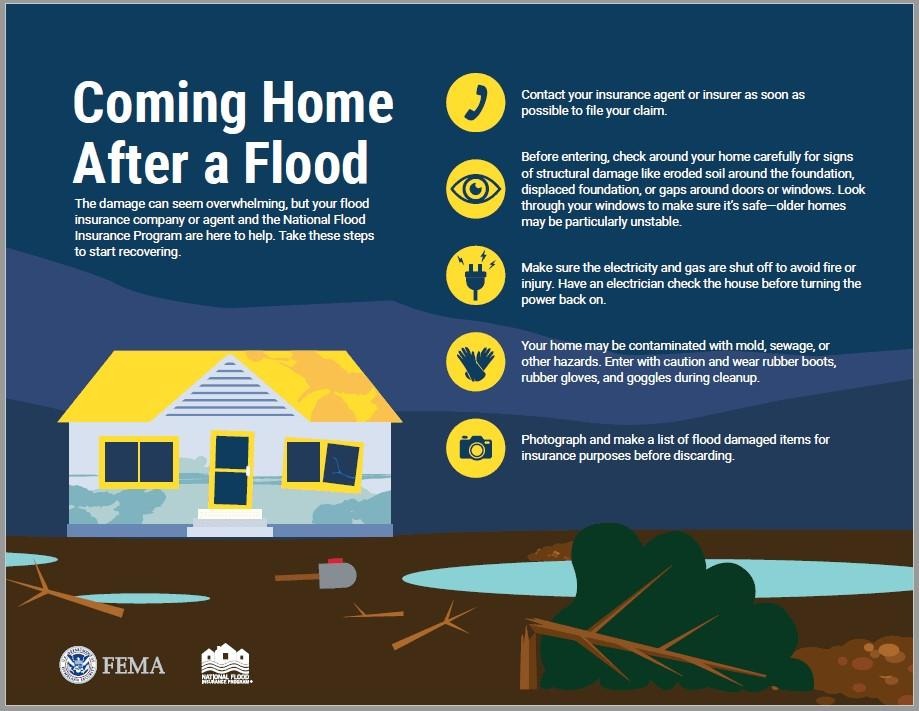
- If you evacuate lock your house. Preplan a designated spot out of the flooded area where everyone can meet if the family becomes separated.
- Before entering your home, check for structural damage.
- Make sure that the electricity is turned off when you return home. Do not use appliances or motors that have gotten wet unless they have been taken apart, cleaned, and dried.
- Wash and clean everything. Floodwaters can carry chemicals and germs that can be harmful to your health. Spoiled food, cosmetics and medicines are health hazards. When in doubt, throw it away.
- Be alert for gas leaks. If you smell natural gas or hear a hissing noise, likely it is a gas leak. Leave the area and immediately call 911 to report the leak.
- Take photos of floodwater in and around your home and save any damaged personal property.
- Make a list of damaged or lost items. If possible, include their purchase date and value with receipts. Keep photos of items that may require disposal due to excessive damage.
- Wear gloves and boots to clean and disinfect your home and belongings. Wet items should be cleaned with a pine-oil cleanser and bleach, completely dried, and monitored for several days for any fungal growth and odors.
- Prevent mold by removing any moist, wet, or soiled content from your house.
- Keep power off until an electrician has inspected your system for safety.
- Boil water for drinking and food preparation until authorities tell you that your water supply is safe.
- If you have flood insurance, call your insurance agent to file a claim.
- Before rebuilding or repairing flood damage, if your property is located in the floodplain contact the City’s Floodplain Manager to verify the requirements. The City of Little Rock Municipal Codes and Floodplain Ordinance requires developments in the regulatory floodplain, including repairs and improvements to be permitted.