Flood Insurance Information
Why would you need flood insurance?
- Flooding is the most common and costly natural disaster in the United States – and it can happen anywhere, regardless of a property’s location relative to the nationally recognized floodplain boundaries. Causes of flooding can be:
- Failing drainage systems
- Heavy rainfall or rapid snowmelt
- Broken water mains
- Mudflows or runoffs from hillsides.
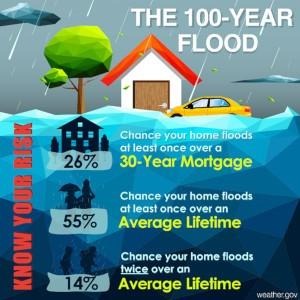
- More than 20% of NFIP claims come from moderate- and low-risk areas. If your property is located in a high-risk area, your home has a 26% chance of flooding over a 30-year mortgage—more than double the risk of fire.
- Standard homeowners and renters insurance policies do not cover flood damage, homeowners must purchase a separate flood insurance policy to be protected.
- In case of flooding, federal disaster assistance is only available if the President declares a federal disaster. Federal disaster assistance comes in the form of low-interest loans that must be repaid, often in addition to mortgage expenses. Flood insurance claim payments do not have to be paid back.
- If your property has received federal disaster assistance before, you must have flood insurance to qualify for future disaster assistance. This includes disaster grants from FEMA and U.S. Small Business Administration disaster loans. This requirement is tied to a property, not an individual homeowner. That means if you bought a home from someone who once got disaster aid for it, you are required to maintain flood insurance.
- There is typically a 30-day waiting period for an National Flood Insurance Program (NFIP) policy to go into effect, unless the coverage is mandated to be purchased by a government backed lender or is related to a community flood map change.
- People outside of mapped high-risk flood areas file nearly 25% of all National Flood Insurance Program flood insurance claims and receive one-third of Federal Disaster Assistance for flooding.
Flood insurance in most cases is not mandatory.
You’re required to have flood insurance if you own a home or business in a Special Flood Hazard Area (SFHA) and have a government-backed mortgage. Some banks may also require flood insurance, even if you don’t live in a high-risk area.
Little Rock is a participant of the National Flood Insurance Program (NFIP), which makes its citizens eligible for federal flood insurance and the community eligible to receive federal disaster assistance. The National Flood Insurance Program (NFIP) is a federally backed insurance program, managed by FEMA, that is delivered to the public by a network of more than 47 insurance companies and the NFIP Direct.
In order to participate in the NFIP, the community is required to adopt and enforce a floodplain ordinance. Several different sections of the City of Little Rock Municipal Codes contain regulations to properties in the regulatory floodplain.
In addition to the NFIP coverage citizens of Little Rock can purchase private flood insurance at any time, even if they don’t live in the floodplain or their mortgage lender doesn’t require it.
- The first step towards buying a flood insurance policy is getting a quote.
- Share the quote with an agent near you or call your insurance company or agent (the same person who sold you your auto or home insurance). If you need help finding a provider, go to floodsmart.gov/get-insured/flood-insurance-provider or call the NFIP at (877) 336-2627.
Resources
- The FEMA National Flood Insurance Program (NFIP) found at floodsmart.gov are additional sources of floodplain service information.
- FEMA flood insurance information: https://www.fema.gov/flood-insurance
- NFIP Direct
- To find out how much flooding and insurance can cost you, click here: Floodsmart | The National Flood Insurance Program