What is a community school?
Through a strong partnership with the Little Rock School District, the City of Little Rock has implemented the community school strategy across eight campuses. These schools address the holistic needs of the child. They provide a platform for collaborative leadership, giving community members, parents, and partners a voice in determining the necessary support and resources. From school gardens to health clinics, mental health services to after-school programs, and even banks, these community schools are a testament to our commitment to comprehensive support.
Current Community Schools
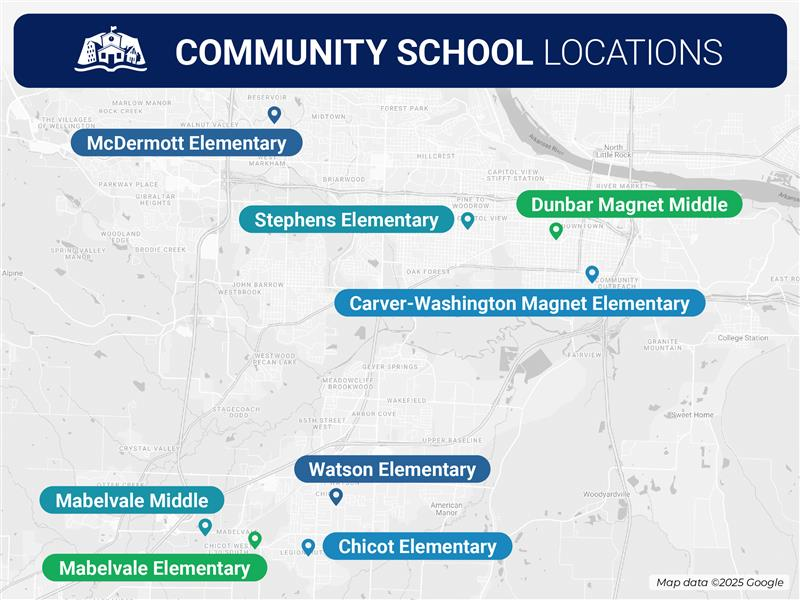
There are currently eight schools located in the southern, southeastern, and central portions of the city: Chicot, Mabelvale, McDermott, Stephens, Carver-Washington, and Watson elementary schools; and Mabelvale and Dunbar middle schools.
The current schools were chosen from key locations in some of Little Rock’s most vulnerable neighborhoods, identified to have needs including food insecurity, lack of access to healthcare, large numbers of families whose first language is not English, and high rates of absenteeism among students. Across these schools, large numbers of students were not reading at grade level. In coming years, we anticipate expanding the Community Schools program to include additional elementary and middle schools.
Essentials for Community School Transformation
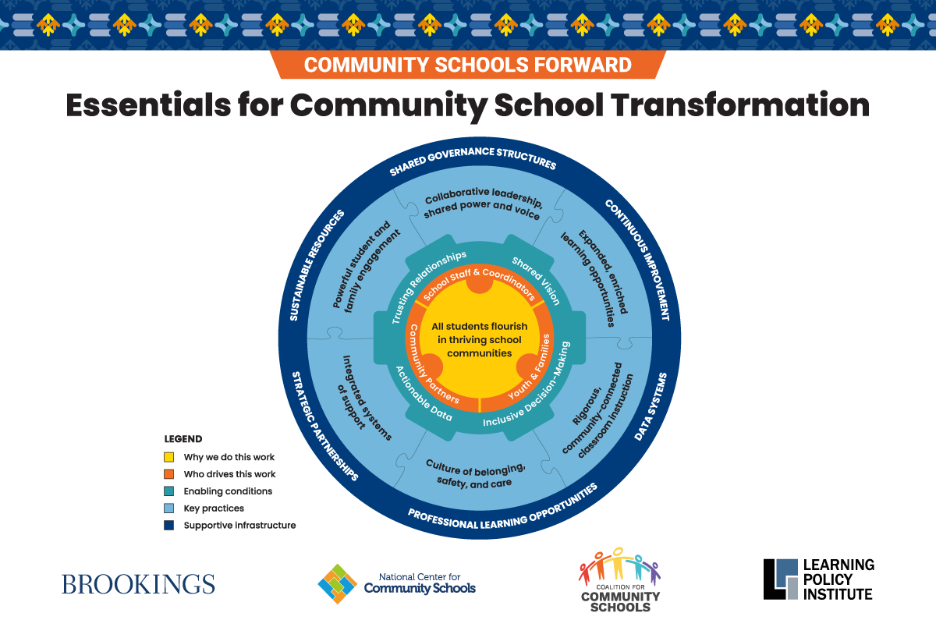
While each Community School is different, all include use the six essentials for community school transformation in their planning and programming. By utilizing these essentials, community schools strive to create environments where all students can thrive academically, socially, and emotionally, ultimately leading to improved outcomes for both students and the broader community.
- Powerful student and family engagement.
Families and students actively participate in the school community and are key partners in decision-making, shaping the school’s environment, priorities, and partnerships. Families’ lived experiences and wisdom inform approaches to student success. - Collaborative leadership and shared power and voice
Families, students, teachers, principals, and community partners co-create a culture of professional learning, collective trust, and shared responsibility as they make decisions together. - Culture of belonging, safety, and care
School climate is welcoming and fosters trust among students, families, partners, and staff. Each person in the school community is valued for their rich diversity of experiences and is encouraged to share their views, knowledge, and culture. - Expanded and enriched learning opportunities
Out of school time programs provide expanded time, expanded staffing, and expanded opportunities for learning and engagement. These include academic instruction, enrichment and extracurricular activities, and individualized support. - Rigorous, community-connected classroom instruction
Teaching and learning in the school infuses high-level content and skills with real-world learning opportunities. Curriculum is deeply connected to the local community and students’ identities, cultures, and experiences, providing opportunities to engage in meaningful inquiry-based learning and problem-solving. - Integrated systems of support
A dedicated team that intentionally and systematically coordinates services, supports, and opportunities that foster individual and collective well-being, using an assets-based approach to nurture the strengths and address the needs of students and families.